
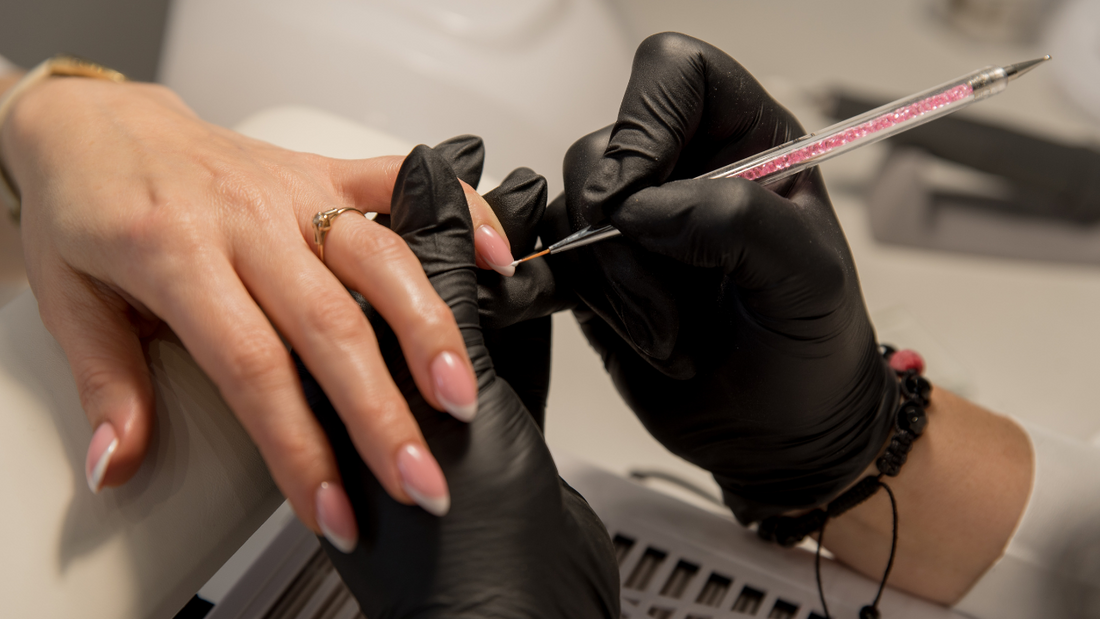
Nail Tech Coverage in California: Licenses and Salon Rules
Nail tech insurance questions in California start with a simpler one: are you licensed and set up the right way? The Board of Barbering and Cosmetology licenses manicurists and salons, and state labor agencies decide whether you are an employee or running your own business. That status shapes which coverage questions apply to you.
Picture a manicurist in Riverside about to rent a station at a salon in Ontario. She wants to know what license she needs, who answers for the salon, what the safety rules say, and what coverage nail techs usually look at. This guide covers each piece with official sources.
Key takeaways
- A California manicurist license requires a nail care course of not less than 400 hours, according to the Board.
- Only the salon owner may apply for an establishment license, and the Board holds the owner responsible for everyone working there.
- California's ABC test starts by assuming workers are employees; DIR lists manicurists in a licensed-beauty exception from January 1, 2026 through December 31, 2028.
- California employers must carry workers' compensation, even with only one employee.
The License You Need to Do Nails in California
The Board's frequently asked questions describe the job plainly: "Manicurists can give manicures and pedicures and apply false nails (using gel, acrylic or silk)."
The Board's license requirements page says an applicant must be not less than 17 years of age and must have completed the 10th grade or its equivalent. It also states: "A nail care course established by a school shall consist of not less than 400 hours of practical and technical instruction."
Salon and Establishment License Rules
A licensed nail tech still needs a licensed place to work. When a booth renter or independent contractor asks whether they need their own establishment license, the Board answers: "No, only the owner of the establishment may apply for an establishment license."
The Board's fact sheet for establishment owners spells out what owners are responsible for:
- "You must have a licensee in charge at all times."
- "Make sure that the licenses of all your employees/booth renters are current and displayed properly."
On fines, the Board's FAQ says: "The Board does not differentiate between independent contractors, booth renters, or employees." Its inspections page describes "random and targeted health and safety inspections".
A home salon requires a completed Establishment Application, and services inside a mobile unit require a Mobile Unit Application. Our guide to running a nail salon from home covers that setup in more detail.
Booth Renter or Employee: How California Decides
The Department of Industrial Relations (DIR) explains on its independent contractor page: "The ABC test starts with an assumption that all workers are employees, and provides the test that a hiring entity must satisfy to prove that the workers are independent contractors." A worker is a contractor under the test only if all three parts are met:
- The worker is free from the hiring entity's control and direction, both under the contract and in fact.
- The work is outside the usual course of the hiring entity's business.
- The worker is customarily engaged in an independently established trade or business of the same nature.
Licensed beauty workers can be treated differently. DIR lists an exception for "licensed barbers, cosmetologists, electrologists, estheticians, or manicurists (manicurists only prior to 2025 and from January 1, 2026 through December 31, 2028)". DIR notes that for some occupations, the Borello test applies instead.
The Employment Development Department's (EDD) 2024 Barbering and Cosmetology Industry Information Sheet lists conditions for that exception, including that the worker:
- "Sets their own rates, processes their own payments, and is paid directly by clients."
- "Has their own book of business and schedules their own appointments."
- "Maintains their own business license for the services offered to clients."
That sheet is dated November 2024 and says manicurists would lose the exception on January 1, 2025 "unless extended by the Legislature". DIR's current page shows the later 2026 through 2028 window.
DIR says wage and hour laws, workplace safety laws, unemployment insurance, and retaliation laws "protect employees, but not independent contractors". Questions go to the Labor Commissioner's Office at (833) 526-4636 or EDD's Taxpayer Assistance Center at 1-888-745-3886.
Health and Safety Rules Every Nail Tech Should Know
The Board's Article 12 health and safety rules apply in salons from Fontana to Fresno. Key points for nail work:
- Tools: "Before use upon a client, all non-electrical tools that can be disinfected, excluding shears, shall be disinfected" in a set order, ending with full immersion in an EPA-registered disinfectant.
- Single-use items: Items that cannot be disinfected, including buffers, pumice stones, toe separators, and emery boards, must be thrown away immediately after use on a single client.
- Foot spas: After each client, a whirlpool footspa must be cleaned and disinfectant circulated through the basin "for at least 10 minutes".
- Hand washing: Every licensee must wash hands with soap and water or an equally effective alcohol-based product immediately before serving each client.
- Banned items: Salons may not have methyl methacrylate monomer on the premises, or use "any razor-edged tool for the purpose of removing calluses or other similar procedures".
Nail Tech Insurance: Common Coverage Types Explained
Which coverage fits depends on whether you are an employee, a booth renter, or a salon owner. The U.S. Small Business Administration's business insurance guide describes the common types:
- General liability: "This coverage protects against financial loss as the result of bodily injury, property damage, medical expenses, libel, slander, defending lawsuits, and settlement bonds or judgments."
- Professional liability: "This coverage protects against financial loss as a result of malpractice, errors, and negligence."
- Commercial property: Covers loss and damage to company property from events the SBA lists, including fire, smoke, wind and hailstorms, and vandalism.
- Business owner's policy: According to the SBA, "A business owner's policy is an insurance package that combines all of the typical coverage options into one bundle."
According to DIR's Division of Workers' Compensation: "California employers are required by law to have workers' compensation insurance, even if they have only one employee." For a wider look at salon coverage, see our guide on what coverage a hair and beauty salon in California needs.
Frequently Asked Questions
How many training hours does a California manicurist need?
The Board says a nail care course "shall consist of not less than 400 hours of practical and technical instruction". Applicants must also be at least 17 and have completed the 10th grade or equivalent.
Does a booth renter need an establishment license?
No. The Board's FAQ says "only the owner of the establishment may apply for an establishment license". The owner is responsible for the salon, including making sure booth renters' licenses are current and displayed properly.
Are manicurists employees or independent contractors in 2026?
It depends on the facts. DIR lists manicurists in a licensed-beauty exception from January 1, 2026 through December 31, 2028, and EDD's 2024 sheet lists conditions the worker must meet. Both the ABC and Borello tests assume the worker is an employee, and the hiring entity must show otherwise.
Does a nail salon with one employee need workers' comp?
Yes. DIR's Division of Workers' Compensation states: "California employers are required by law to have workers' compensation insurance, even if they have only one employee."
Protecting Your Nail Business
Licensing, worker status, and safety rules come first. At Farmers Insurance - Young Douglas, we help nail techs and salon owners review which coverage fits their setup, whether they rent a booth or own the shop. Coverage depends on the policy, so review yours when your work arrangement changes, and our advice library has more small business guides. Get a free quote and coverage review with our team.
Sources: California Board of Barbering and Cosmetology: FAQs; License Requirements; Becoming an Establishment Owner; Inspections; Article 12, Health and Safety. California DIR: Independent Contractor Versus Employee; Workers' Compensation Employer Information; Labor Commissioner Workplace Posting for Barbering and Cosmetology. EDD: Barbering and Cosmetology Industry Information Sheet (DE 231C). U.S. SBA: Get Business Insurance.
Last updated: September 23, 2026.